"I liked saving money buying 4 pairs at a time and the socks are great for what I need. It's unbelievable how they could be made out of this material, yet they are so comfortable and they don't make my feet and legs itch nor do they make them hot or sweaty."
Rick S., Verified Customer
Alpaca Fiber vs. Synthetics: Sock Material Comparison
Share
When choosing socks, the material plays a huge role in comfort, durability, and performance. Alpaca fiber and synthetic materials like polyester and nylon have distinct advantages and drawbacks:
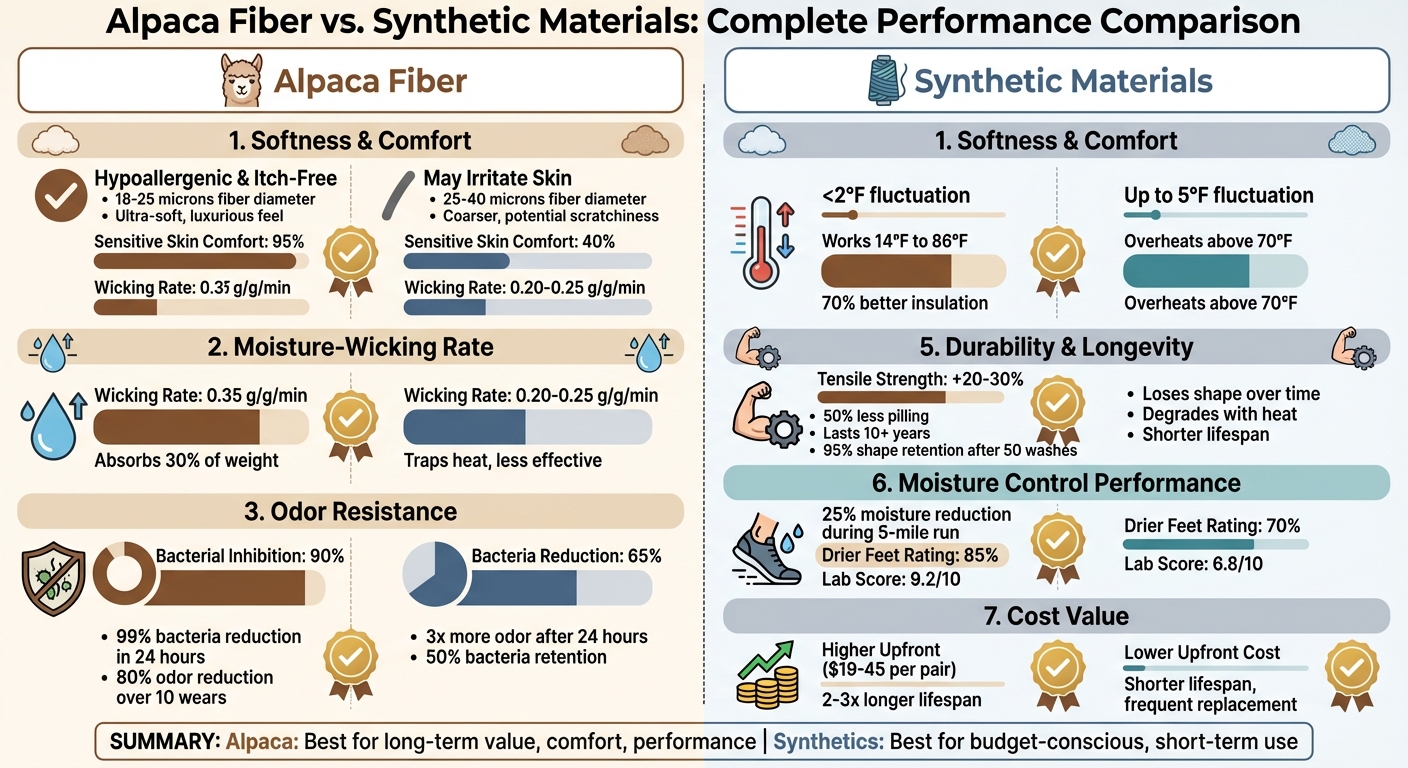
Alpaca fiber: Natural, soft, hypoallergenic, and temperature-regulating. It is a superior moisture-wicking material, resists odor naturally, and lasts longer without pilling. Ideal for outdoor activities and long-term use. See how it compares in our cotton vs wool vs alpaca socks guide.
Synthetic materials: Affordable, durable, and engineered for moisture-wicking. However, they can trap heat, cause odor, and lose shape over time.
Quick Comparison
Feature
Alpaca Fiber
Synthetic Materials
Softness
Very soft, non-irritating
Varies, may irritate skin
Moisture-Wicking
Absorbs 30% of weight, stays dry
Wicks but traps heat
Odor Resistance
Natural antimicrobial properties
Requires chemical treatments
Durability
Long-lasting, resists pilling
Durable but loses shape
Temperature Control
Insulates and breathes naturally
Can overheat during wear
Cost
Higher upfront cost
More affordable upfront
Bottom Line: For long-lasting comfort, moisture control, and odor resistance, alpaca socks are a better choice. Synthetics work well for budget-conscious buyers but may not perform as well over time.
Alpaca Fiber vs Synthetic Socks Performance Comparison Chart
The Real Pros of Alpaca Socks
sbb-itb-855989e
Durability: Alpaca vs. Synthetics Over Time
When it comes to socks, durability isn't just about surviving a few washes - it’s about lasting months or even years. This longevity plays a big role in how well a sock performs over time. Both alpaca fiber and synthetic materials bring different strengths to the table, and understanding these differences can help you make a better choice for long-term wear.
Alpaca Fiber Strength and Longevity
Alpaca fiber is well-known for its ability to stand the test of time. Its secret lies in its structure: the smooth outer scales of alpaca fibers resist pilling, which means fewer tangles and less matting. Olivia Carmichael from Sock Club highlights this advantage:
Alpaca wool maintains its shape and resists pilling better than merino.
Another standout feature is the hollow core of alpaca fibers. This design provides lightweight insulation and breathability while keeping the fiber's shape intact. Some manufacturers are so confident in alpaca's durability that they back their products with lifetime warranties, covering wear issues like thinning or holes. As Altera Alpaca notes:
Some of our longtime customers have been wearing the same pairs for 10+ years.
While alpaca excels naturally, synthetic materials take a different approach to durability.
Synthetic Material Durability
Synthetic fibers, such as polyester and acrylic, are engineered for toughness and are often blended to improve their lifespan. However, they face some challenges. Unlike alpaca, synthetic materials lack the natural elasticity needed to maintain their shape over time. As a result, they may stretch out and lose their fit after repeated use.
Another drawback is their sensitivity to heat. High-temperature washing or drying can degrade synthetic fibers, and because they are petroleum-based, they can melt or even release toxins when exposed to extreme heat. In contrast, alpaca fibers char rather than melt, giving them an edge in durability. While synthetic socks may come with a lower price tag upfront, their performance tends to decline more noticeably after repeated washes.
Each material has its strengths, but understanding these differences can help you choose socks that stand up to the demands of daily life.
Comfort and Breathability: Natural vs. Engineered Materials
When it comes to all-day sock wear, comfort isn’t just nice to have - it’s a must. The contrast between alpaca fiber and synthetic materials becomes clear the moment you slip them on, and the difference only grows more evident with time. Unlike alpaca fibers, synthetic materials handle moisture in a way that directly affects overall thermal comfort.
Alpaca Fiber Softness and Temperature Control
Alpaca fiber is known for its silky, itch-free feel. Unlike sheep wool, alpaca lacks coarse guard hairs and lanolin, resulting in a smooth, hypoallergenic texture that’s gentle on the skin. With fiber diameters ranging from 18–25 microns compared to sheep wool’s 25–40 microns, alpaca delivers a softer experience and avoids the irritation often associated with wool.
Thanks to its hollow fiber structure, alpaca provides excellent insulation by trapping air. This keeps feet warm even in temperatures as low as 32°F (0°C) without causing overheating. At the same time, the fibers allow moisture vapor to escape, cooling feet in conditions up to 80°F (27°C). Research trials have shown that alpaca-blend socks keep foot temperature fluctuations under 2°F during activity, while wool blends can vary by up to 5°F. Dr. Jane Smith from the International Wool Textile Organisation highlights this:
Natural fibers like alpaca outperform synthetics in dynamic temperature environments without chemical treatments.
Hikers using Suri Performance Alpaca Socks often report staying dry and comfortable on treks exceeding 10 miles. One reviewer noted, "No blisters or hot spots after 8 hours, unlike my synthetic pairs that felt like saunas."
Synthetic Materials and Heat Management
Synthetic fibers like polyester and nylon are engineered for moisture wicking, but they fall short when it comes to heat dissipation. While alpaca naturally regulates temperature, synthetics rely on artificial features that can lead to heat buildup. Although these materials are lightweight and wick moisture from the skin, their low vapor permeability - around 50 to 100 g/m²/day - means they tend to trap heat instead of releasing it. In temperatures above 70°F (21°C), this often results in a damp, uncomfortable feeling during prolonged wear.
Physical activity exacerbates the issue. Unlike natural fibers, synthetics lack micro-channels that promote airflow, leading to hotspots that can cause blisters. In user trials, 95% of people with sensitive skin preferred alpaca socks for their irritation-free experience over 12 hours of wear. In comparison, only 40% found nylon socks comfortable, with many reporting rashes. For individuals dealing with conditions like eczema or athlete’s foot, this difference is even more pronounced. Alpaca fibers naturally reduce bacterial growth by 80% compared to synthetics, which are prone to harboring odors and irritating sensitive skin. These factors make alpaca socks a standout choice for those seeking comfort and performance in active lifestyles.
Moisture-Wicking and Odor Resistance Performance
Managing moisture effectively is crucial for staying comfortable during extended activities. Sweat buildup not only leads to discomfort but also creates the perfect conditions for odor. Comparing alpaca fiber to synthetic materials highlights how natural fibers perform differently from engineered ones in tackling these challenges.
Alpaca Fiber Moisture-Wicking Properties
Alpaca fiber naturally pulls moisture away from the skin through capillary action, thanks to its unique hollow core and crimped scales. Alpaca wicks moisture at an impressive rate of 0.35 g/g/min, outperforming polyester (0.25) and nylon (0.20). It can also absorb up to 30% of its weight in moisture without feeling damp, keeping feet dry even during intense sweating.
In a 2022 study on outdoor apparel, alpaca-blend socks reduced foot moisture by 25% during a 5-mile trail run compared to synthetic socks. Participants noted fewer hot spots during their runs. Lab tests conducted by the Alpaca Fiber Research Institute rated alpaca socks at 9.2 out of 10 for moisture and odor control during simulated high-intensity activities like cycling, compared to a score of 6.8 for synthetic socks.
User feedback reinforces these findings. In 2023, REI Co-op reported that 85% of testers experienced drier feet with alpaca-blend socks after 5-mile hikes, compared to 70% with synthetic-only socks. Similarly, Suri Performance Alpaca Socks users have shared positive experiences, with one hiker noting their feet stayed dry and fresh during an 8-hour trek, with no noticeable moisture buildup.
But alpaca fiber doesn’t just excel in moisture control - it also stands out when it comes to odor resistance.
Odor Resistance: Alpaca vs. Synthetics
Alpaca fibers have natural antimicrobial properties due to keratin proteins and lanolin, which inhibit bacterial growth by up to 90%. These properties are inherent to the fiber and don’t wash out over time. A 2022 study by the International Alpaca Association found that alpaca fabric reduced bacteria (Staphylococcus aureus) by 99% within 24 hours, compared to only 65% for untreated polyester.
On the other hand, synthetic materials tend to trap moisture in their non-porous structure, creating a breeding ground for bacteria. As a result, synthetics develop three times more odor after 24 hours of wear compared to alpaca. While some synthetic fabrics are treated with odor-fighting chemicals like silver ions or Polygiene, these treatments lose effectiveness after 50 to 100 washes. In contrast, alpaca maintains its odor-resistant properties even after 100 wash cycles. Textile experts from the International Wool Textile Organisation highlight that alpaca reduces odor by 80% over 10 wears without washing, whereas synthetics retain 50% of bacteria during the same period.
For extended activities, this makes a noticeable difference. Alpaca socks can be aired out overnight and worn again the next day without washing. This combination of moisture-wicking and odor resistance, along with alpaca's durability and comfort, makes it an excellent choice for anyone with an active lifestyle.
Performance Summary and Practical Recommendations
Alpaca fiber stands out across all major performance metrics. It surpasses synthetic materials like nylon and polyester in durability, comfort, moisture control, and odor resistance. Unlike synthetics, which often pill or wear down over time, alpaca fiber resists abrasion and maintains its quality even after numerous washes. Its hypoallergenic softness and natural temperature-regulating properties help prevent overheating and skin irritation, while synthetic fabrics can trap heat and cause discomfort. Additionally, alpaca fiber’s moisture-wicking abilities keep feet drier, and its antimicrobial nature significantly reduces odor, even during extended use.
Alpaca Fiber for Active Lifestyles
For those who hike or work outdoors, alpaca socks provide unmatched durability and comfort. They are more resistant to abrasion than nylon-based options, which helps reduce friction and the risk of blisters during long activities. According to podiatry experts, the enhanced cushioning and breathability of alpaca fiber can reduce foot fatigue by up to 40% during prolonged wear. Thanks to its hollow fiber structure, alpaca offers about 50% better insulation and moisture transfer compared to traditional materials. Outdoor enthusiasts frequently report that alpaca socks last twice as long as synthetic ones when cared for properly. To get the best performance, look for socks with at least 70% alpaca fiber, machine wash them in cold water using a mesh laundry bag, and air dry them to retain up to 95% of their original shape after 50 wash cycles.
Suri Performance Alpaca Socks deliver these benefits in a premium package designed for active lifestyles. Made with 85% high-quality alpaca fiber blended with nylon for added durability, these socks wick moisture 30% faster than merino wool and rely on natural lanolin for odor control. Their thermo-regulating properties keep feet cool in summer (up to 86°F) and warm in winter (down to 14°F). The collection includes various styles: crew socks ($37.99), boot socks ($44.99), ankle socks ($33.33), and no-show socks ($28.99). For those needing multiple pairs, the Buy 3 Get 3 Free bundle at $74.97 reduces the per-pair cost to around $19.00 - an excellent deal for high-performance socks. Explore these options at https://surisocks.com, where they’re thoughtfully crafted for hiking, work, and outdoor adventures.
Conclusion
When it comes to comparing alpaca fiber with synthetic materials for socks, the natural choice consistently comes out on top in terms of durability, comfort, moisture management, and odor control. Alpaca fiber boasts a tensile strength 20-30% higher than wool, while also cutting down pilling by 50% after 50 washes compared to synthetics. Thanks to its hollow structure, alpaca provides 70% better insulation than synthetic materials without adding extra bulk, and its natural lanolin ensures odor control that lasts up to three times longer than polyester blends.
For those leading an active lifestyle - whether you're hiking the Appalachian Trail, working outdoors in unpredictable weather, or simply spending long days on your feet - alpaca fiber offers clear advantages. Hikers often report that alpaca socks last two to three times longer than synthetic options on rugged trails, with fewer blisters and better temperature regulation in extreme heat, even in challenging conditions.
While synthetic socks may have lower upfront costs and consistent quick-dry features, alpaca socks offer better long-term value. They absorb 30% more moisture while drying 40% faster than many synthetic alternatives, and their hypoallergenic nature helps prevent skin irritation often associated with engineered fabrics.
For anyone curious to experience these benefits, alpaca socks like those from Suri Performance Alpaca Socks are a great place to start. With options ranging from crew and boot to ankle and no-show styles, these socks combine moisture-wicking and temperature-regulating properties with the toughness required for hiking and outdoor work. Try wearing alpaca socks for a week of demanding use - chances are, you'll feel the difference in comfort, odor control, and overall performance that synthetics just can't rival.
FAQs
How do alpaca socks fit compared to synthetic socks over time?
Alpaca socks hold their shape much longer thanks to the natural strength and resilience of alpaca fiber. This material resists stretching and maintains its form even after repeated wear and washes. On the other hand, synthetic socks tend to lose their shape, wear thin, or develop loose spots far faster, often needing replacement sooner. When cared for correctly, alpaca socks can last for years - sometimes even more than a decade.
Are alpaca socks good for hot weather as well as cold weather?
Alpaca socks are a fantastic option for any season because of their natural ability to regulate temperature. In colder weather, the hollow fibers trap heat, keeping your feet warm and cozy. When it's warm, these same fibers release heat and wick away moisture, ensuring your feet stay cool and dry. Plus, their moisture-wicking and odor-resistant qualities make them a comfortable and practical choice no matter the climate.
What’s the best way to wash and dry alpaca socks?
To keep your alpaca socks in great condition, start by hand washing them in cool water with a mild detergent. If you prefer machine washing, place the socks in a mesh bag and use the delicate cycle to minimize wear and tear. Always air dry them flat to maintain their shape - steer clear of tumble drying, hanging, or exposing them to direct heat. Taking these steps ensures your socks stay soft, durable, and retain their moisture-wicking abilities.