"I liked saving money buying 4 pairs at a time and the socks are great for what I need. It's unbelievable how they could be made out of this material, yet they are so comfortable and they don't make my feet and legs itch nor do they make them hot or sweaty."
Rick S., Verified Customer
How Alpaca Fiber Regulates Heat in All Seasons
Share
Alpaca socks can help keep feet warm without the same bulk in every season. I’d choose from 3 sock weights: lightweight for heat or hard activity, midweight for changing weather, and heavyweight for cold days with little movement.
Here’s what I’d check before choosing a pair:
Heat and sweat: Alpaca traps insulating air, but moisture movement and drying also depend on the blend, knit, and shoe airflow.
Fit: <u>Leave room to wiggle your toes.</u> Thick socks can make feet colder if they crowd your boots.
Activity and style: Match cushioning to how much you move and sock height to your footwear - not to warmth alone.
Layers and care: Start with one pair, add a liner only if it fits comfortably, pack dry spares, and skip fabric softeners.
My rule: choose the whole sock, not just the fiber. No single alpaca blend or style suits every season.
How Alpaca Fiber Handles Heat and Moisture
Fiber Structure and Air Insulation
Some alpaca fibers contain tiny air pockets in their core, though this structure varies. These pockets trap heat and help moisture vapor move through the fiber.
The blend and knit density matter, too. A dense knit performs differently from an open knit, even when both contain alpaca. That structure also affects how quickly moisture travels through the sock.
Moisture Absorption, Wicking, and Drying
Absorption, wicking, and drying do different jobs. Alpaca’s low absorption helps it feel drier against your skin. Wicking moves liquid through the fabric, while drying releases heat as moisture evaporates. Together, these processes reduce dampness - but they won't keep feet dry when you're sweating heavily or airflow is poor.
Humidity and limited airflow slow evaporation, especially inside tight work boots. The blend and knit also affect moisture movement and drying. Skip fabric softeners: they can leave coatings that interfere with moisture handling.
In cold weather, insulation helps hold in warmth. In warmer weather, moisture handling helps feet feel less hot. These differences help explain why alpaca, synthetics, and cotton behave differently inside the same shoe.
Alpaca vs. Synthetics and Cotton
Fiber isn't the only factor. Blend, thickness, knit, and fit all affect performance - and which socks suit a given temperature or activity level.
Material
How it handles heat
How it handles sweat
Key limitation
Alpaca
Helps regulate temperature by trapping insulating air
Low absorption; wicks through the fabric
Depends on blend and knit density
Engineered synthetics
Provide passive insulation
Wick moisture and dry quickly
Can hold odor
Cotton
Loses insulation when wet
Absorbs and retains moisture
Heavy and cold when wet
Sock weight and construction matter just as much as fiber choice. Next, those details determine how a sock should be built for cold, mild, or humid conditions.
sbb-itb-855989e
Choosing Sock Construction for Each Season
Alpaca Sock Guide for Every Season
Choose sock weight, cushioning, and knit density based on temperature, moisture, and activity.
Conditions
Recommended sock characteristics
What to avoid
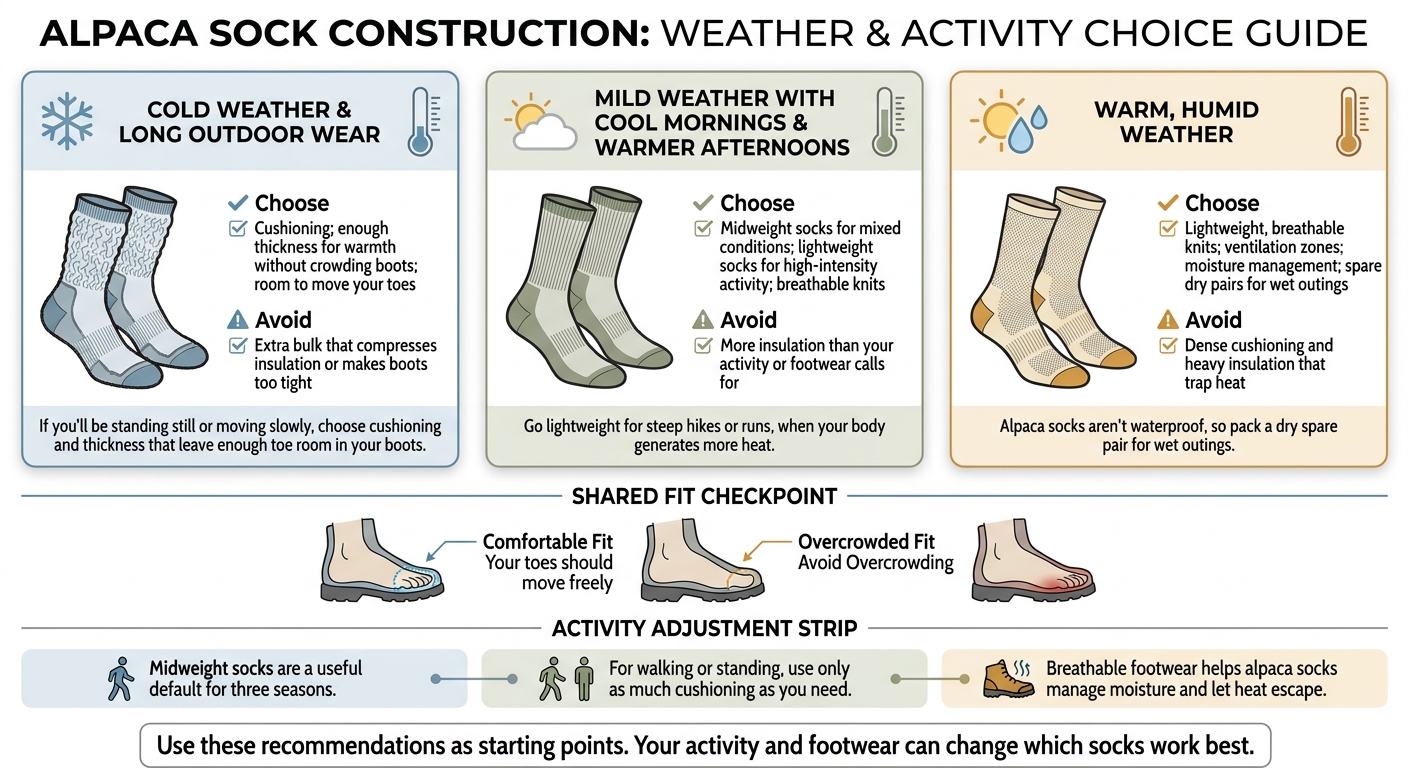
Cold weather and long outdoor wear
Cushioning; enough thickness for warmth without crowding boots; room to move your toes
Extra bulk that compresses insulation or makes boots too tight
Mild weather with cool mornings and warmer afternoons
Midweight socks for mixed conditions; lightweight socks for high-intensity activity; breathable knits
More insulation than your activity or footwear calls for
Dense cushioning and heavy insulation that trap heat
Use these recommendations as starting points. Your activity and footwear can change which socks work best.
Cold Weather: Warm Socks With Room to Move
In cold weather, fit matters as much as thickness. If you’ll be standing still or moving slowly, choose ultra-cushioned boot socks that leave enough toe room in your boots. Cushioned construction helps preserve the air space that provides insulation.
Match sock height to your boots, then check the fit with both on: your toes should move freely. A thicker sock won’t keep you warmer if it makes your boots tight, compresses insulation, or restricts circulation.
Mild Weather: Balancing Morning and Afternoon Comfort
For cool mornings and warmer afternoons, choose socks that work at both ends of the temperature range. Midweight performance crew socks are a useful default for three seasons. Go lightweight for steep hikes or runs, when your body generates more heat.
For walking or standing, use only as much cushioning as you need. Breathable footwear helps alpaca socks manage moisture and let heat escape.
Warm and Humid Weather: Reducing Heat Buildup
As heat and sweat increase, breathability matters more than padding. Choose lightweight knits, ventilation zones, and footwear with enough room to prevent a tight fit. Skip dense cushioning and heavy insulation, which trap heat.
Moisture management still matters. Alpaca socks aren’t waterproof, so pack a dry spare pair for wet outings.
Choosing Sock Layers and Styles by Activity
Once you’ve chosen a sock weight for the season, match the layers and style to your activity and footwear. Alpaca fibers help regulate heat, but construction, fit, and activity affect how the socks perform.
Choose height for coverage, not warmth. Thickness, knit density, cushioning, and fit matter more for insulation than sock height.
Sock Fit, Liners, and Spare Pairs
Start with one well-fitting pair. Add a thin liner only if it reduces friction and both layers lie flat. Your toes should still move freely. For longer or multi-day outings, pack a spare pair and let worn socks dry completely before wearing them again.
Socks for Hiking, Work, Running, and Everyday Wear
Match sock construction to how much you move and how long you stay still. Movement generates heat; standing or sitting in the cold calls for more insulation. Your activity level and available shoe space guide how much insulation you need.
Activity
Sock characteristics
Footwear and fit considerations
Hiking
Lighter knit for climbs, more insulation for rests
Leave room for toe movement in boots
Work
Durable; lighter for active shifts, more insulation for standing in cold conditions
Match coverage to boots; allow room and airflow
Running
Lightweight, breathable knit for sustained movement
Suri Performance Alpaca Socks offers crew, boot, ankle, and no-show styles. Match the height to your footwear for the coverage you need. For heat control, compare each product’s blend, thickness, cushioning, and ventilation. Don’t assume every style has the same features.
Conclusion: Match Your Socks to Weather and Activity
Match sock weight, fit, and airflow to the weather and your activity. Alpaca helps trap heat and manage moisture, but knit density, cushioning, and footwear ventilation also affect how socks perform.
Choose thicker socks for cold days with little movement and lighter socks for warm weather or sustained activity. Leave enough room to move your toes comfortably. Add layers only if your footwear still fits comfortably.
No single alpaca sock design fits every season or activity. If your feet feel clammy or stay damp, change into dry socks, then reduce bulk or improve ventilation.
FAQs
What alpaca percentage should I look for?
Choose a high-quality blend that balances performance and durability. Suri Performance Alpaca Socks use a proprietary blend with 80% alpaca fiber. It’s designed to make the most of alpaca’s hollow-core structure for temperature regulation, along with its moisture-wicking and odor-resistant properties. The blend also keeps the socks durable and comfortable for all-day wear across seasons.
Why do my feet still sweat in alpaca socks?
Alpaca fiber wicks moisture and helps regulate temperature, but your feet can still sweat. Shoes with poor airflow or high-intensity activity can make sweat build up faster than it evaporates.
Alpaca socks handle moisture well, but they’re not made for constant water exposure. Heavy rain or water sports can leave them with more moisture than they can handle.
How can I tell if I need sock liners?
You usually don’t need sock liners with high-quality alpaca socks. Alpaca fiber’s hollow-core structure wicks moisture away from your skin three times more effectively than cotton or wool. That helps keep your feet dry and reduces the friction that causes blisters.
In extreme cold, you can wear alpaca socks under thicker wool socks. The alpaca base layer handles moisture and keeps your skin dry, while the outer wool layer adds insulation.